- Home
- Areas we cover
- Greater London
Office leak detection in Greater London
A wet ceiling tile or unexplained water use can interrupt an office day. ADI traces hidden leaks in Greater London offices, with access to work areas and shared pipework planned with your facilities contact.
Areas we cover in Greater London
Greater London place examples
- Croydon
- Bromley
- Enfield
- Harrow
- Hayes
- Romford
- Richmond
- Sutton
Map of Greater London
Checking a suspected parapet route above London offices
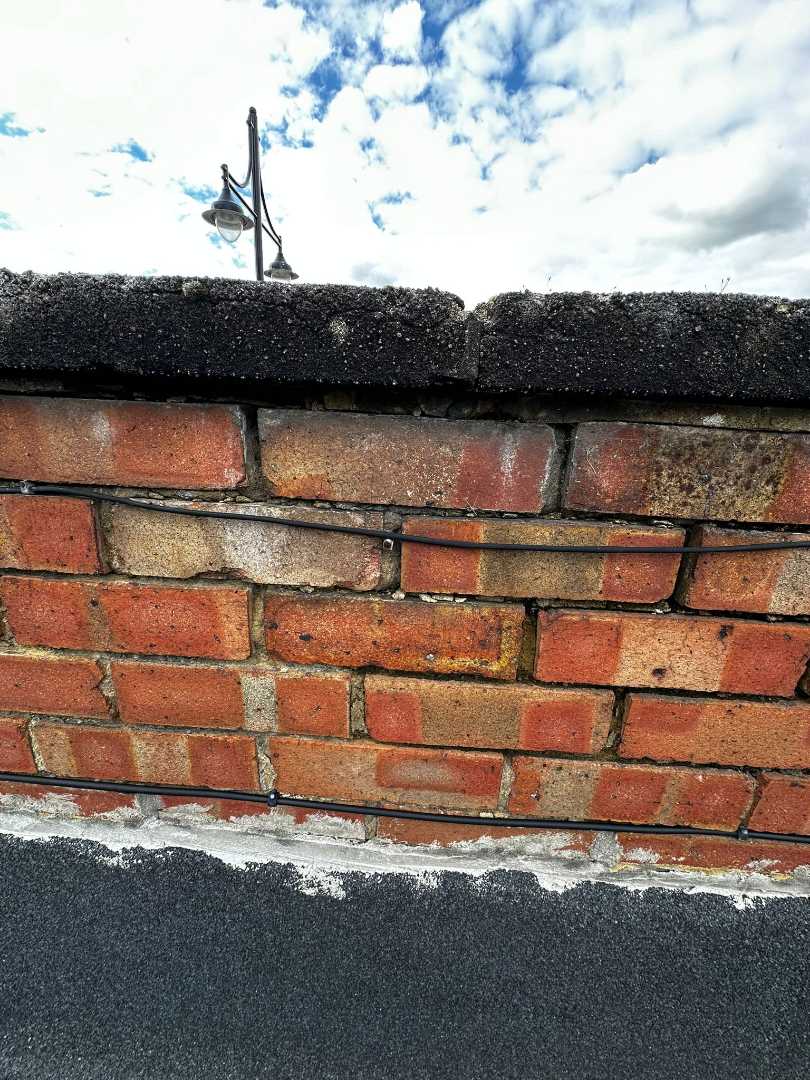
At London offices where ceiling damage had been reported, the engineer found no elevated moisture readings or thermal anomalies during the visit. Inspection of the flat roof also found no visible membrane damage. These checks did not reproduce an active internal leak.
Flood testing at the parapet produced drips on the outside of the wall, with no new interior damage observed during the test. The engineer suspected water entering through the parapet and tracking beneath the membrane, and recommended repointing and work to the coping. Those works were recommendations: ADI did not carry out a building repair or record a successful retest.
Leak detection services for offices in Greater London
Six parts of an office building that leak in their own way. Every survey starts non-invasive, and pipework and drainage leaks can be quoted for repair.
Flat roofs, terraces and plant decks
Record rain-related staining and arrange safe access. ADI investigates the source; roof repairs require a roofer.
How it is investigatedWater mains, car park supplies and underground pipes
Provide meter readings and identify shared users, external pipe routes and accessible isolation points.
How it is investigatedWashrooms, kitchens and tea points
Note the fitting used before water appears and arrange access to the rooms above and below.
How it is investigatedHeating, cooling and hot water
Share pressurisation records and plant details. Agree which circuits can be isolated without disrupting essential services.
How it is investigatedRisers, ceiling voids and raised floors
Arrange access through the building manager and identify any work areas or services affected by testing.
How it is investigatedDrains, basements and lower floors
Provide drainage records and available inspection points; basement damp may need several possible sources checked.
How it is investigated
Test the suspected system
Temperature and moisture patterns guide further checks; they do not prove a source on their own. Suitable pipework may be tested with pressure, acoustic or tracer-gas methods. Access and isolation are agreed with the building contact.
Moisture readings
Readings across a ceiling or wall show how far water has travelled. None were elevated on the visit recorded above, which is a finding in itself.
Thermal imaging
Records surface temperature differences that can point to a route behind a finish. No anomaly appeared here, so the search moved outside.
Flood testing
Water is run over a suspect roof or parapet under controlled conditions. At these offices it produced drips on the outside of the wall.
Pressure testing
An isolated section either holds pressure or it does not, which separates a leaking riser or supply from a sound one before anything is opened.
Acoustic listening
Amplifies water escaping from a pressurised pipe beneath a floor or a service yard. Plant noise in an occupied office can mask it.
Tracer gas
Introduced into suitable isolated pipework and detected where it surfaces, which suits a run beneath a screeded floor or a car park.
Office buildings we work in across Greater London
The kind of building changes who needs to be involved and how the leak is traced.
Multi-let office buildings
Several companies on one supply, with the landlord or managing agent responsible for shared pipework. Access to other floors is planned before the visit.
Business park offices
Low-rise buildings round a shared car park, where the incoming main can run a long way under tarmac before it reaches the plant room.
Serviced and co-working offices
Busy kitchens, showers and washrooms on every floor, and members who need the space open while the survey happens.
Offices above shops
Mixed-use buildings where water from an upstairs washroom can show up in the shop below, or the other way round.
Older and converted buildings
Pipes buried in floors and walls through years of refits, where finding the leak first saves opening up finishes that are costly to replace.
Company headquarters
Larger buildings with plant rooms, risers and roof plant, and a facilities team who needs a report the insurer and the board can both use.
- Trustpilot TrustScore
- 4.7
- Reviews
- 1600+
- Engineers nationwide
- 25+
- Public liability insurance
- £5m
What customers say about ADI on Trustpilot

Selected excerpts from five-star reviews of ADI’s wider service across the UK.


Read the full review“Mark Pavitt was fantastic- found the leak, repaired it , explained issue in detail and was super friendly.”
Read the full review“They kept me advised on what they were doing and were realistic about the outcomes at all times.”
Office leak detection questions in Greater London
Which parts of Greater London does this page cover?
This page follows the ceremonial county of Greater London: the 32 London boroughs, including Westminster, but excluding the separate City of London. The places listed are examples within Greater London, not a complete list or a record of past jobs. Call with the full postcode to discuss the property and current availability.
Where can I check the water hardness for the property?
Check the actual drinking-water supplier’s information for your postcode. Hardness varies locally, and a hardness result does not establish why a pipe is leaking. Describe the symptoms and any earlier investigations when arranging a survey.
Can you investigate a leak in a multi-tenanted office building in London?
If the office shares a building with other tenants, tell ADI about the layout and the affected areas. Arrange access with the relevant occupiers and building manager so the investigation can be planned. Findings do not decide lease responsibilities.
What if the office is in a listed or heritage building?
Tell the office about listing, protected finishes and access restrictions before the visit. Non-invasive tests help narrow the search, but further access may still be needed for confirmation or repair and must be agreed separately.
What if the leak is coming from another tenant or the floor above?
In a shared building it often is. Water travels through ceiling voids and risers, so the stain in your office can start in a washroom upstairs, a neighbouring unit or the landlord's pipework. The engineer needs access to those areas too, so let the landlord or managing agent know before the visit. The report says where the leak actually is, with photographs, which gives everyone the same facts when working out who arranges the repair.
Call about a leak in an office in Greater London
Give the office the postcode, the floor and what you have noticed. They will talk through the survey, give you a quote and current availability, and book the engineer.
- Monday to Friday, 7:30am to 6:30pm
- Calls reach ADI Leak Detection's office in High Wycombe. Engineers cover England, Scotland and Wales.